

Resources
Online course
Understanding CHARGE syndrome
This is a free online course offering quality education on the latest knowledge and research on CHARGE syndrome from the world’s foremost experts in the field.
Course chapters include:
Diagnosis and medical aspects of CHARGE and genetics
Communication and sensory integration
Behaviour and social interactions
Education and the adult years
The course is always open, making it easy to access any time you need it. You can complete the full course, over 6-8 weeks (2 hours per week, self paced). Share it with your healthcare and education teams.
CHARGE Syndrome: A Narrative Review and Update on Diagnosis, Assessment and Management
This paper, which is a collaboration between Australian and international clinicians and researchers, offers an up-to-date overview of CHARGE syndrome. It highlights why early diagnosis, thoughtful assessment and lifelong, coordinated care matter, while drawing attention to often-overlooked health, sensory, communication and wellbeing needs that can make a real difference for individuals and families.
By Eleni M. van Gelder, Dr. Kim Blake et al.
Publications
There are many publications on CHARGE syndrome. We’ve pulled together a short list of key papers written by international experts. They may not always be in plain English, but they’re valuable to share with your healthcare or education professionals.
Growth in CHARGE syndrome: optimizing care with a multidisciplinary approach
In this systematic review, we describe what is currently known about growth in CHARGE syndrome and how it is influenced by commonly seen clinical problems including feeding difficulties, hypogonadotropic hypogonadism and growth hormone deficiency. Furthermore, we provide recommendations for a multidisciplinary approach.
By Dieuwerke R Dijk, Gianni Bocca, Conny M van Ravenswaaij-Arts
A Checklist of Educational Needs for Individuals with CHARGE Syndrome, 2018
This checklist could be used by a multidisciplinary team as a starting point for brainstorming possible services, for a school IEP meeting, or for a funding plan.
Authors: Lillian J. Slavin and Timothy S. Hartshorne
A Checklist of Educational Needs for Individuals with CHARGE Syndrome, 2018
Genetic counseling in CHARGE syndrome: Diagnostic evaluation through follow up
Genetic counselling plays a vital role from the start, helping families understand the diagnosis, what it means for their child’s development, and where to find support. Early connection with specialists in deafblindness and sensory impairments, as well as ongoing access to resources, can make a big difference in supporting the child and family.
By Meg Hefner
Behaviour in CHARGE Syndrome, 2017
This article addresses how pain, sensory issues, and anxiety may impact the behavior of individuals with CHARGE syndrome, and how the development of self-regulation skills might help to mitigate some of the behaviors.
By Timothy S. Hartshorne
The education of learners with CHARGE syndrome, 2017
This research paper lists the potential learning characteristics of the learner with CHARGE and discusses the differences and similarities of learners with CHARGE syndrome, to learners from the deafblind community.
Author: Gail Deuce
CHARGE Syndrome Check-List: Health supervision across the life-span from head to toe
A comprehensive approach to health screening and management for individuals with CHARGE syndrome is essential. We developed a checklist organized by body system and age to guide the healthcare provider in their approach to care. The checklist was evaluated using a modified Delphi method to develop a final consensus.
By Dr Kim Blake
Understanding learning challenges for people with multi-sensory impairments
Victorian Deaf Education Institute seminar
Topics and time stamps
Effective strategies for supporting and improving educational and communication outcomes for multi-sensory impaired learners.
Professor Tim Hartshorne, Professor of Psychology, Central Michigan University
Time stamp: 00:07:50Intervention strategies within a multi-tiered system of support to students with multi-sensory impairments and ASD.
Professor Daniel Gadke, Mississippi State University
Time stamp: 01:38:02Explores the issues surrounding sexuality and wellbeing for students with multi-sensory impairments
Dr Kasee Stratton-Gadke Assistant Professor Mississippi State University
Time stamp: 02:31:02Multi-disciplinary assessments of students who are deafblind or have multi-sensory impairments
Professor Nancy Hartshorne, School Psychologist , Delta College, Michigan
Time stamp: 04:22:39Exploring issues around self-stimulation, self-regulation and multi-sensory impairment
David Brown, Deafblind Educational Specialist
Time stamp: 05:06:00
NDIS
Writing a Carer Statement
A Carer Statement is one of the most important documents you provide as part of your child’s NDIS planning. This video explains the purpose and importance of a carer statement, in the context of planning meetings.
Writing a carer statement - webinar on YouTube
3 minutes | June 2026
-
NDIS and CHARGE Syndrome: Carer Statements for NDIS
Transcript for Deafblind Information Australia Webinar 11 June, 2026
Tracey:
One of the most important documents or evidence that you're going to provide in your planning meeting is a carer statement. And hopefully you've heard of these, but you may not have. Make sure if you write one that the partner or the delegate has read this. And sometimes it's also referred to as a carer impact statement. And on our slide here is a resource from the Association for Children with Disability. It's a really good resource on how to write a carer statement if you're wanting more information and we'll send this resource to you after the webinar. So what is a carer statement? It's a document that's written by the primary carer. And it's a statement that shows the level of support the carer provides to the participant that's above and beyond what you would give another child or adult the same age without CHARGE syndrome. And what you want to do is outline all your informal supports that you have in place. So this might be family, friends, mainstream supports. But more importantly, if you don't have any informal supports, it's really important to mention it in this statement. Describe the impact of your caring role on the family time and on siblings. And if your level of care impacts your life goals, for example, your current level of employment outside the home is being impacted, mention that too. Writing a carer statement can be really helpful in supporting your need for more support worker hours or respite even. Try and keep it to one or two pages, which is really, really difficult. But this is an important document because it captures information that won't be covered in any other reports or evidence that you provide to the NDIA. If you've never written one and you're not sure where to start, you can start by keeping a detailed diary over a 24-hour period or across a week if your days change quite a bit that captures all aspects of your caring role. A family I have previously supported wrote a carer statement for their young son who had bilateral cochlear implants and significant balance issues. And so they needed to shadow him to not only keep his speech processes on his head as he constantly took them off, but to ensure he didn't fall when he was outside or on equipment or climbing. And the mum wrote a carer statement outlining the level of support he required and he got funding in his plan for support worker hours to allow the mum to be more engaged with the family and the siblings, and also to ensure that he had good access to spoken language and he was safe when he was out and about. I can review and give feedback to strengthen these statements if you're interested.
Recent NDIS changes
This video explains the latest access and eligibility, and the requirement to show significant functional impact.
Recent NDIS changes - webinar on YouTube
15 minutes | June 2026
-
Recent NDIS changes
Transcript for Deafblind Information Australia Webinar 11 June, 2026
So tonight I'm going to talk about some of the recent NDIS changes that might be relevant to participants with CHARGE syndrome. I'm going to outline some different assessments and supports that can be really useful, as well as the new support needs assessment tool that's coming. And I'm going to talk about what evidence NDIS delegates are looking for in your plan reassessments. And I'm hopefully going to cover the ways that I can help you in my role as Project Officer.
So because we're talking NDIS, I'm going to be using NDIS terminology throughout the webinar. So when I'm talking about participants, these are our children and adults with CHARGE syndrome that are on the scheme. Representatives are the parents and carers. The partners are the local area coordinators and the early childhood partners. that you're already probably well connected to in your community. And the delegates when I refer to them are the NDIS planners who make the decisions about what ultimately goes into the plans. And it's important here to note that the LACs and the ECPs, they're not NDIA staff. They are external organisations that are contracted by the NDIA.
So on to some of the changes. New applicants to the scheme will receive a notice of impairment when they are deemed eligible for the scheme and these notices will list the impairment category or categories that a participant meets access requirements for to the scheme. It will also state that their impairment is permanent and they're eligible for the NDIS. And at the moment there's no timeline for existing participants to receive these notices, but it is planned to be rolled out. Eligibility is no longer diagnosis based. So the lists of disability and diagnoses, the list A and B are gone. They're no longer used, and new participants, when they come onto the scheme, need to meet the criteria for one or more of these 6 impairment categories: sensory, cognitive, intellectual, neurological, physical and psychological. A person with CHARGE syndrome almost always meets NDIS access requirements because CHARGE causes permanent impairments across multiple domains and results in substantial functional impact in their daily life. And when I talk later on about functional capacity assessments, you'll see the domains that I'm talking about. The NDIS doesn't require every impairment to be present, only that the combined impact is significant and lifelong.
Check-ins are now taking place for existing participants and we'll look at what these are in the coming slides.
So there's been the introduction of the ICAN assessment and they are the new support needs assessment tool being rolled out by NDIS. They're currently only used with over 16-year-olds who are primarily new participants onto the scheme or participants with less complex needs that are due for a scheduled planned reassessment. It's not being used nationally. And the NDIA has not released any documentation indicating a pediatric version of the ICAN or a new universal tool for under 16 year olds.
Functional capacity assessments are carrying more weight. So we'll look at these in more detail. And there are funding periods in all new plans, and they're quarterly. So every year funding is broken up into 3 month increments. And given that, if you have an assessment or a block of therapy that's needed at a particular time in a participant's new plan, make sure you let the partner or the delegate know. So this can be built into the plan. They will put extra funding into a quarter of the plan to line up with when that assessment or that block of therapy is due or expected. Unspent funding from one funding period will be rolled over to the next, but not from one plan into a new plan.So we're going to look at these check-ins that are occurring now. Families and participants are getting these calls. Existing participants will be reassessed when their plan comes up for renewal after the new framework is in place, and they maybe have reassessments at key transitional periods. Until then, these check-in phone calls with participants or the representatives will be done. And they're to help ensure participants' plans continue to meet their everyday needs while the system continues to change. They're carried out by the LACs and the ECPs if you're already linked in with them, but they might be carried out by the NDIS planners or delegates if you haven't already been linked in to the partners or if it's a more complex plan. You'll be notified in advance that this call is coming up and booked in. And when they do contact you to set up this phone call, make sure you get confirmation from them that it's a check-in and not a plan reassessment because they won't necessarily use that language in that phone call. If it's a check-in, you don't need any reports. It's just a conversation, but there's things that you can consider and we'll cover them in a sec. And if you're not ready for that phone call for the check-in or you haven't had time to think about what they're going to ask you, you can ask for it to be postponed. So if you have a check-in coming up, consider if anything has changed. And so that might be a new diagnosis. It could be you've had a new assessment done recently that's recommending different supports. You could have a change in hearing, vision, balance. It could be a change in fatigue. Communication needs might have changed, school or community access could have changed, or there might be a change in behaviour. Also think about are there any important transitions coming up for the participant? Are the current therapies working or not working well in the plan? And are the goals still relevant? A lot of goals that are in current plans are from years ago because they've been consistently rolled over. And is the plan budget going to last for the full plan period? And there's three possible outcomes of this check-in phone call. If everything's going well, you can tell them that you're happy with the plan and no review is needed. Or if you need small changes, ask for small changes only. Or if things have changed markedly, ask for a full plan reassessment, but not today as you want to gather all your documentations and your evidence before you book in that meeting.
And if you do need a full plan reassessment, make sure you have recent reports, quotes for new equipment, and an updated carer statement ready before your plan reassessment date.
So functional capacity assessments. These assessments typically happen over a number of sessions and they look at a participant's ability to perform daily tasks across the day in all their natural environments. They assess different domains. We'll look quickly at what those domains might be and they might do them in person or via telehealth or a combination of both. Quite often they might do the first one in person and they'll do subsequent ones via telehealth to save on the travel costs. If a participant's disability support needs change, getting an occupational therapist to do a functional capacity assessment is really good evidence for NDIS. And they are typically done by occupational therapists or OTs, but they can also be done by physiotherapists, psychologists or medical specialists, but they must be qualified to administer these types of assessments.
So when talking about functional capacity assessments, we need to consider these four questions. Can the participant do these things consistently across all their environments every day? What does it cost them to be able to do that? What support needs to be in place in order for them to do it? And what happens if that support isn't there? So these are the domains that might be assessed in a functional capacity assessment. Self-care, mobility. Mobility can be quite key for participants with CHARGE because CHARGE affects balance, spatial awareness and physical confidence in ways that aren't always visible. For example, a person might be able to walk on a level surface but requires supervision on stairs, uneven surfaces or in unfamiliar environments, or they may even need a wheelchair at certain times for support. A good functional capacity assessment should hopefully capture this much detail. They may also look at fine motor, sensory processing, communication, learning and cognition, community access and social interaction. There's lots of domains. Domestic life, self-management. And in terms of self-management for adults with CHARGE who are seeking independence, this domain is particularly important and often undersold. Safety and risk, fatigue and physical wellbeing.
So now we're going to look at the new support needs assessment tool, the ICAN. So it's a core tool that's going to be used by NDIS in the new support needs assessment. And what it's going to do is inform participant budgets under the new planning framework that hasn't been rolled out yet. As I said previously, it's designed for people aged 16 years and over. The Centre for Disability Studies, the CDS, developed the ICAN and launched it in 2002. So it's an assessment that's been around for a really long time and they've refined it over the years. And now the University of Melbourne has partnered with the CDS to support the NDIA to adapt the tool for the new NDIS planning framework. And it will be administered by certified assessors, not therapists. And at the moment, the NDIA is building a national workforce of certified assessors who will be recruited from across Australia. So the ICAN should be an appropriate and helpful assessment tool for adults with CHARGE syndrome, but it's going to work best when paired with specialist assessments that explain the person's full sensory, communication, mobility and medical needs. And here is just a list of some of the assessments that may be needed in addition to the ICAN.
So evidence gathering for NDIS, what is evidence? Evidence is the documentation that you provide to your NDIS partner, usually prior to your plan reassessment. What you need to do is gather functional impact of evidence of hearing, vision, balance, communication and feeding. You need to track what supports are helping and bring in some real life examples to your planning meetings or your planning reassessments. What's working really well in terms of your NDIS support, but also is there a gap there and what's the repercussions for the participant because they don't have that support in their plan. Good reports make up a part of your evidence for the NDIS and they link the impairment to daily living and supports needed. And in my role as project officer, I can help you prepare for NDIS planning meetings and reassessments. And the ways that I can do that is by reviewing and getting feedback on reports from your NDIS providers, reviewing current NDIS goals and supports, and helping identify if there's any gaps there and what new supports might be appropriate. And we can look at the goals that you've got that might be more relevant for the next plan. I can also review specialist reports if they're open to suggestions and feedback. And typically we know that reports from specialists and health professionals aren't well written for what the NDIS needs. But I have found that paediatrician reports tend to be the exception to this. So next slide, Madelene.
So to be considered deafblind, we know you can have any level of combined vision and hearing impairment. But what not everybody knows is that the NDIS recognises dual sensory loss. And this can unlock services and supports like communication guides that Madelene's going to talk to, skilled support workers and environmental modifications. Now the partners and the delegates will not necessarily raise this. So it's really important that representatives and adult participants do raise this in their planning meetings or their planning reassessments. And just some tips. Representatives won't leave a message on your phone unless your message bank has your first and last name. I always recommend that you ask for any correspondence, even phone calls from the NDIA to be put in writing so you have a record of it. Also your partners, it's good to have them put things in emails for you. And have a support person with you for plan reassessments and make sure you carve out some time to do something nice for yourself after that meeting as it can be really emotionally taxing for you.
Functional vision assessments and turning 18
This video explains what reports should include, and what happens when the person turns 18.
Functional vision assessments and turning 18 - webinar on YouTube
5.30 minutes | June 2026
-
Functional Vision Assessments, other reports and turning 18
Transcript for Webinar 11 June 2026
So the other evidence is your report. Therapist reports should be less than 12 months old. They should be objective, concise and decision ready. For delegates, decision ready means that the delegate has everything they need in front of them to make a funding decision without chasing more information. When a report isn't decision ready, the NDIA may ask for more information. They could delay the plan or reduce or decline supports. You want clear evidence of functional impact across the daily life. And you want to try and align the team reports and recommendations so they've got the speech therapist's recommendations are across everybody's reports, not just in their own. Recommendations need to be specific, measurable and tied to functional need.
Your diagnosis letters never expire. They don't have to be less than 12 months old. And it's really good for your reports to outline the risks to the participant if the reasonable and necessary supports aren't in place. And it's really important that they speak to the reasonable and necessary criteria in their reports.
So now I'm going to talk about functional vision assessments. If these assessment reports are done well, they can be great evidence for NDIS, particularly around your vision supports. They're done by an orthoptist who is an eye care professional. Orthoptists are different from optometrists and ophthalmologists. So your optometrists can do vision testing, but they will also fix up your glasses, your prescription glasses. An ophthalmologist is like the ENT for eyes. Your orthoptist is different again. What they do is that they assess someone, what somebody can see and what they're unable to see. They will do some of the vision tests that the ophthalmologist and the optometrist do. For young children, they'll use really highly motivating and age-appropriate toys and books. And they'll look at how to set up a person's environment for best visual access. Now if you have booked in a functional vision assessment with an orthoptist, a participant's ophthalmology eye report is foundational to this assessment. So send that through to them, the most recent one prior to the assessment. And it's really important that the orthoptist has an understanding of the participant's communication needs going into the assessment. So how do they communicate, how will they let you know what they can see, what motivates them, what don't they like and what helps them to regulate. And a participant's communication and occupational therapy reports can be really helpful for the orthoptist to read before this assessment. So the reports that come out of these functional vision assessments should summarise the NDIS-related goals, the relevant background, the assessment results that were captured that day, and key recommendations for NDIS vision supports. They will have practical recommendations in there for parents and the participants teams. So, for example, if a participant uses Auslan, then the orthoptist will put in recommendations for how the communication partners should be, how close they should be standing and whether they need to make any adaptations or modifications when they're signing to the participant. If you're wanting a functional vision assessment, ideally, we'd love an orthoptist with experience with CHARGE syndrome. You know more than me that you may not always get that, but it can't hurt to ask. And if it's an assessment with a young child, you want to make sure they've got paediatric experience. Orthoptists can also trial low vision aids and assistive technology equipment, but this is usually an additional assessment which requires more time, and all these assessments are funded under NDIS. Occasionally I have heard of LACs or plan managers pushing back and saying that these assessments and orthoptists aren't funded under NDIS, but you can mention that orthoptists are listed in the Allied Health Professionals category in the operational documents.
A good functional vision assessment will include a recommendation for when the next functional vision assessment should be done. They're not usually done as a one-off unless the participant's vision is really, really stable.
So for those in our audience who have younger children or teens, here's some considerations for when they're turning 18. Parents transition to an informal support role when the participant turns 18. But if the young person cannot make decisions or manage their plan, parents can elect to become a nominee or a correspondence nominee. So a plan nominee makes decisions on behalf of the participant, but correspondence nominees receive letters, attend meetings, speak for them, but don't actually make decisions for the participant. So you really need to be thinking about what's most appropriate for a participant well before they turn 18. And this is a really important transition and it's something that I can support you with.
Communication guides
This video explains the role and benefits of communication guides for individuals with deaf-blindness, specifically highlighting the experience of a 26-year-old with Charge syndrome.
“An interpreter interprets the spoken word. What my son needed was someone helping him access the whole experience.”
Communication guides - webinar on YouTube
9 minutes | June 2026
-
Communication guides
Transcript for Deafblind Information Australia Webinar 11 June, 2026
Tracey:
Now I'm going to hand you back to Madelene. She's going to talk to you about communication guides and she'll explain what they are and how they can be useful in the lives of participants with CHARGE syndrome.
Madelene:
Thanks, Tracey. And I'll apologise up front. I've got a bit of a cold. So if I start coughing, forgive me. I learned about communication guides about four years ago. And at that time, I didn't really fully grasp what they were or the benefits of them. Now, having seen the difference they make to my son's quality of life and his ability to engage with the world around him, I'm a big fan for this type of support.
So a communication guide supports someone with deafblindness to access information, their environment, and communication. And they play a key role in facilitating independence, inclusion, autonomy, and helping build relationships. Support workers can learn how to be comm guides. A comm guide is not an Auslan interpreter. They're not a therapist or a personal carer, though with additional training they can take on some of these roles.
So my son is 26 and has CHARGE syndrome. Auslan was his first language. At primary school he had a learning assistant fluent in Auslan. Around 11 years of age, he got a bone anchored hearing aid, which gave him better access to speech. So much so that he chose speech as his first language from that point on. But that didn't make inclusion any easier. High school didn't provide an interpreter. His sensory needs were misunderstood and he struggled until we eventually moved him to a special school. Still no interpreter in that environment, but better ratios and an understanding of disability at least.
His communication is complex, his speech is unclear, and he has executive dysfunction, which means he communicates best when information is clear, structured, and familiar. He needs time and support to process information and respond. In busy, unpredictable environments, that's a lot to ask of the people around him. It was in TAFE in 2022 where we realized just how much he was struggling in learning environments and with social engagement and how inadequate his supports were for his communication needs. Picture a large factory workshop, machinery, noise, movement everywhere. He's at a bench with other students trying to watch an instructor demonstrate how to hold a chisel. He's straining to hear, trying to see, but he can't get close enough. Nobody checks whether he's following. The Auslan interpreter provided by TAFE is becoming frustrated that he won't follow their signing. And at lunchtime, he sits alone in the foyer. That interpreter's frustration missed the point entirely. My son was making a deliberate choice. He wanted to concentrate on hearing the instructor's voice and watch the demonstration as closely as he could.
An interpreter interprets the spoken word. What my son needed was someone helping him access the whole experience. And we kept seeing the same pattern for him in the community, in work experience, day programs, social situations. He was physically present, but never fully part of the activity and what was happening around him. So I started asking, how do other people with communication needs as complex as his get supported, not just to follow the instruction, but to engage meaningfully?
And that search led me to Deafblind Information Australia and communication guide training. So we engaged ABLE Australia to develop a bespoke person-centred communication guide training program for our son’s support team. The program was developed using evidence from various reports including medical, a function vision assessment, psychology, audiology and vision reports to name a few. His team of day program support workers, speech therapists and exercise physiologists did the training and they learned about his CHARGE syndrome diagnosis and what deafblindness means in practice, how he hears, sees and moves through his environment, how fatigue and vestibular challenges impact him, his executive function and communication breakdowns, his health risks such as falls or retinal detachment, the assistive technology he uses, and even how he likes to identify as a person with a disability. He tells people he is hard of hearing, hard of seeing, and hard of swallowing.
The training was delivered virtually over four sessions. On the slide, there's a screenshot taken from one of those virtual sessions showing the team learning about some of the impacts of his vision impairment. So whether your participant is in primary school today or moving into a day program next year, having the team trained as comm guides is a good strategy for strengthening the participant's support and engagement in social situations or unpredictable environments, community, learning environments and with transition.
There is no specific line item for communication guide but NDIS does fund this support. The key is to clearly describe the functional impact of your child's dual sensory loss, explain why the support is reasonable and necessary and link it directly to goals in the plan.
So my son's going through a reassessment as we speak. We've had that check-in phone call and we're now gathering our reports. And we're now having to review all of his goals. So one of the goals he has in his plan this time is around having skilled people who understand his health, his personal care and medical safety needs. And that's things like bowel obstruction. How do we recognise if he's having another bowel obstruction? And he wants them to support his executive functioning challenges so he can complete tasks, manage routines, problem solve, and build independence in his daily life. So what does it look like for him now that he's got a comm guide? Say he's in a social setting and everyone around him is laughing at something, but because it's outside his visual field, he misses it entirely. A comm guide notices and checks in. Hey Sean, do you know why everyone's laughing? Mike just did a funny dance. My son can then engage and be part of that moment. When my son wants to speak, it takes him a few seconds to organize his thoughts, clear his mouth, and get his words out. By then the conversation has moved on or someone has spoken for him. Waiting is hard for the other person, but a comm guide understands this and holds that space so he can contribute and be heard. This is also valuable for him when he's in the community and engaging with shopkeepers. So think back to that TAFE workshop. A comm guide would have sat alongside him, filled the visual gaps, checked in with Sean. Are you following? Do you want the instruction repeated or broken down into steps? And at lunchtime, they'd be there too, helping him connect with classmates and engage in conversation. So a comm guide doesn't just support him to be somewhere. They support him to fully participate.
If you're interested in Comm Guide training for your team, reach out to ABLE Australia, deafblind@ableaustralia.org.au. They run communication guide training periodically. And I'm happy for you to reach out to me as well if you want to know more about the bespoke training program we developed. Back to you, Tracey.
Tube feeding
The Blend
A magazine-style resource for people who are new to tube-feeding. It shares stories, tips and recipes from parents, and professionals in the tube-feeding space.
Succeed
An Australian site for parents and carers of children with complex feeding difficulties. info on what to expect in the early days, Includes tips and tricks and short videos about tube feeding, to share with friends and family.
Books
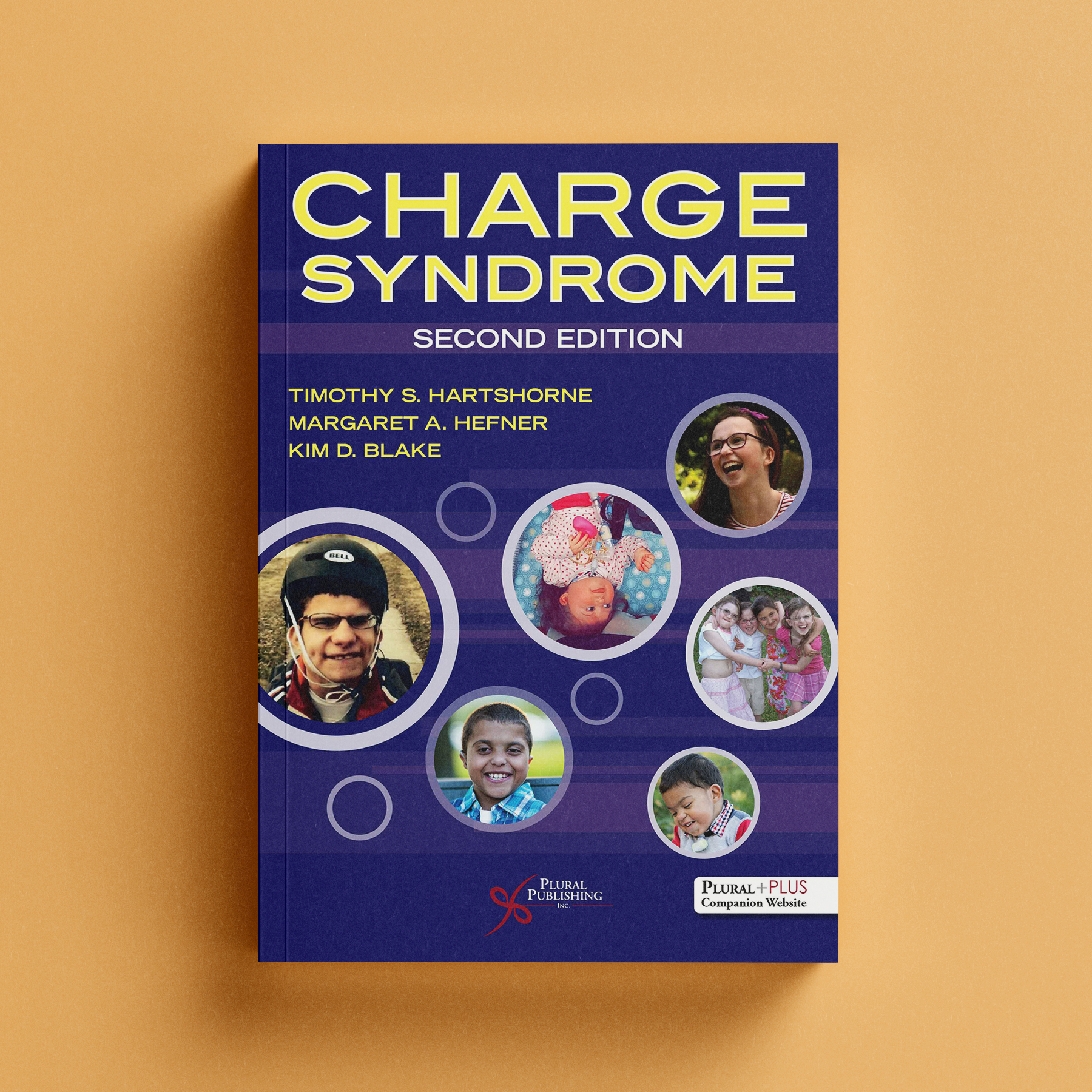
Books written by healthcare professionals and some great books written by parents.